MRIN joins global experts at Tokyo conference on antimicrobial innovation
29 May 2026
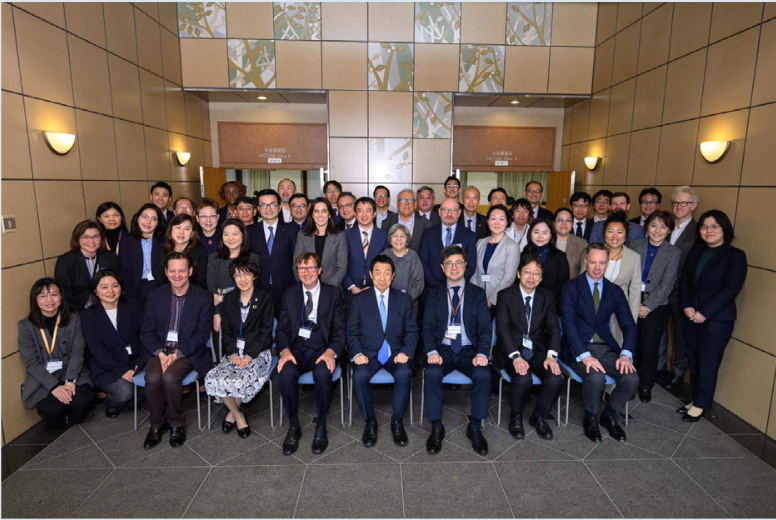
Mochtar Riady Institute for Nanotechnology (MRIN) of Universitas Pelita Harapan, represented by Juandy Jo, M.D., Ph.D., was invited to participate in a two-day conference in Tokyo aimed at reshaping the global ecosystem for antimicrobial research and development.
Event : Building a New Innovation Ecosystem for Antimicrobial R&D
Date / Venue : 4–5 March 2026 / NCGM, Tokyo, Japan
Organizers : Japan Institute for Health Security & Sir Howard Dalton Centre, University of Warwick
The conference, co-convened by the Japan Institute for Health Security and the Sir Howard Dalton Centre at the University of Warwick, UK, brought together researchers, policymakers, and industry leaders to address deep-rooted structural challenges in the antimicrobial R&D pipeline.
Rethinking the antimicrobial innovation landscape
The meeting advanced a vision for a more coordinated, system-wide approach to antimicrobial innovation that embeds R&D within health systems and public institutions rather than relying solely on market-driven incentives. Participants highlighted persistent gaps including a shrinking discovery pipeline, instability in early-stage research, and a disconnect between discovery, development, and deployment. The workshop's central aim was to advance a complementary pathway toward a more sustainable and equitable drug discovery ecosystem for antimicrobials, building long-term resilience and equity in innovation, not to replace existing efforts, but to strengthen and diversify the ecosystem.
Expanding the circle of innovation
A recurring theme throughout the conference was the recognition that antimicrobial innovation is no longer confined to a small group of high-income countries. Countries across low- and middle-income settings, including those in Southeast Asia, are increasingly positioned as co-producers of innovation across the entire R&D lifecycle, contributing scientific, clinical, and manufacturing capabilities. This perspective positions Indonesia and institutions, like MRIN, as meaningful participants in global health security efforts.
Simulation of a system-centred model
Participants engaged in a practical simulation exercise based on the Nakama Model, illustrating how antimicrobial R&D could operate as a coordinated system integrating public research, clinical networks, government coordination, and industry partnerships under a shared public health framework. The exercise demonstrated how diverse actors can contribute complementary strengths within a model oriented towards genuine health needs.
Challenges and the road ahead
Discussions candidly addressed significant practical obstacles, including fragmented financing, critical gaps at transition points in the R&D lifecycle, and the need for governance structures capable of coordinating activity across institutions. The meeting concluded with a call for continued dialogue with policymakers and funders to support more coordinated and inclusive approaches to the growing global threat of antimicrobial resistance.
For the detailed report: https://warwick.ac.uk/sites/lead-amr/publications/tokyo_conference_report_march26.pdf
For the short video: https://www.youtube.com/watch?v=KXNx-7nCfCI